

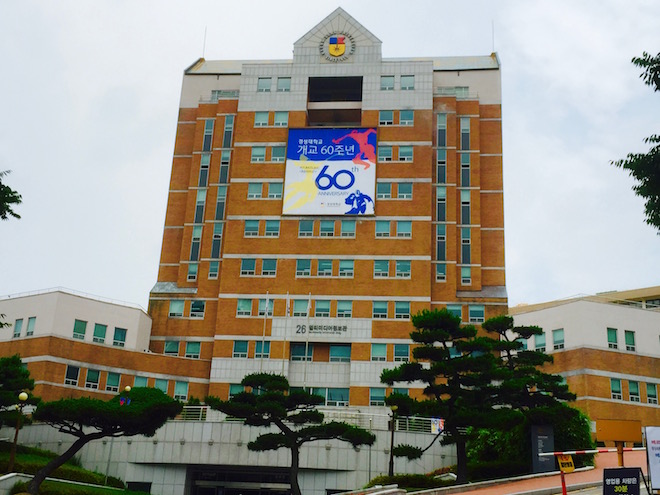

On July 30, Busan City hosted separate “Global University Vision and Innovation Strategy” reporting sessions with Kyungsung University and Pusan National University of Foreign Studies, as part of its efforts to secure the Ministry of Education’s Global University designation.
Busan Mayor Park Heong-joon presided over the sessions, which included university leaders, industry stakeholders, and local officials.
These meetings follow a similar session with Korea Maritime and Ocean University on July 25, with the city aiming to finalize and submit all related implementation plans by August 11.
Kyungsung University presented a plan centered on becoming a “K-Culture Global Innovation Leading University,” focusing on a hyper-realistic campus environment, industry-academia convergence, and the development of Busan as a global hub for media, entertainment, and arts. The university laid out 15 strategic projects under three major pillars, including the creation of mega-industry module labs and content IP development through K-pop and related cultural industries.
Pusan National University of Foreign Studies outlined a vision of building a global innovation university connecting regions and the world through language and data. Their proposal includes constructing an AI-based global education hub, developing multilingual data infrastructure, and supporting regional businesses with customized multilingual solutions to enhance overseas expansion efforts.
Busan City emphasized its commitment to supporting the three candidate universities — Korea Maritime and Ocean University, Kyungsung University, and Pusan National University of Foreign Studies — with administrative and financial assistance. It also announced plans to build specialized industrial complexes, attract research institutes, and improve youth living conditions in the region.
The Global University project is part of a nationwide initiative by the Ministry of Education to support universities outside the Seoul metropolitan area. A total of 30 institutions are expected to receive funding over five years, with this year’s final selections to be made in September following the evaluation of submitted implementation plans.