

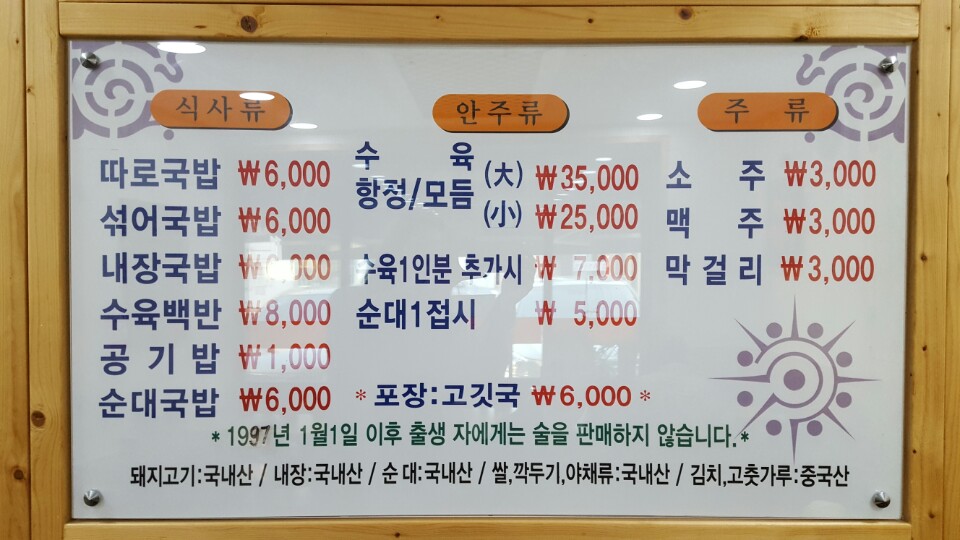

Dining out in South Korea offers an exciting mix of flavors, textures, and culinary traditions, but it can also be overwhelming if you can’t read the menu.
While many restaurants in popular areas offer English translations, countless local spots still feature only Korean-language menus, sometimes handwritten or scribbled on the wall.
If you’re new to the country or just looking to expand your dining options beyond the tourist trail, here’s a practical guide to help you make sense of Korean menus and avoid accidentally ordering something way too spicy.
Common Words You’ll See on a Menu
Understanding just a few key Korean terms can go a long way when it comes to ordering food confidently. Here are some basics:
밥 (bap) – rice (often refers to a full meal)
국 (guk) / 탕 (tang) – soup
찌개 (jjigae) – stew
면 (myeon) – noodles
구이 (gui) – grilled (often meat or fish)
볶음 (bokkeum) – stir-fried
튀김 (twigim) – deep-fried
전골 (jeongol) – hot pot
Pair these with ingredients like 소고기 (sogogi, beef), 돼지고기 (dwaejigogi, pork), 닭고기 (dakgogi, chicken), or 해물 (haemul, seafood) and you’ll start to recognize dish names more easily.
Phrases to Know
이거 뭐예요? (igeo mwoyeyo?) – What is this?
이거 맵나요? (igeo maemnayo?) – Is this spicy?
추천해 주세요 (chucheonhae juseyo) – Please recommend something.
덜 맵게 해 주세요 (deol maepge hae juseyo) – Please make it less spicy.
고기 없어요? (gogi eopseoyo?) – Is there no meat? (for vegetarians)
Spotting Spicy Dishes
Spice is a major part of Korean cuisine, and some dishes can be unexpectedly hot. Keep an eye out for words like:
매운 (maeun) – spicy
고추 (gochu) – chili pepper
양념 (yangnyeom) – seasoned (often implies spicy sauce)
Dishes like 매운탕 (maeuntang, spicy fish stew) or 불닭 (buldak, fire chicken) are best avoided if you’re not into spicy food. Even seemingly mild dishes like 떡볶이 (tteokbokki) can pack a punch.
Reading Between the Lines
Not all menus are straightforward. Some dishes are named after regions (e.g., 부산밀면 – Busan-style wheat noodles), while others use brand-style names you won’t recognize without local knowledge. If you’re unsure, ask staff for recommendations, or check if the restaurant has a photo menu or ordering kiosk, which is increasingly common in casual places.
When in Doubt, Use Your Phone
Translation apps like Papago and Google Translate can help decipher menus—especially handwritten ones. Snap a photo and let the app scan the text. It won’t be perfect, but it often provides enough context to guide your order.