

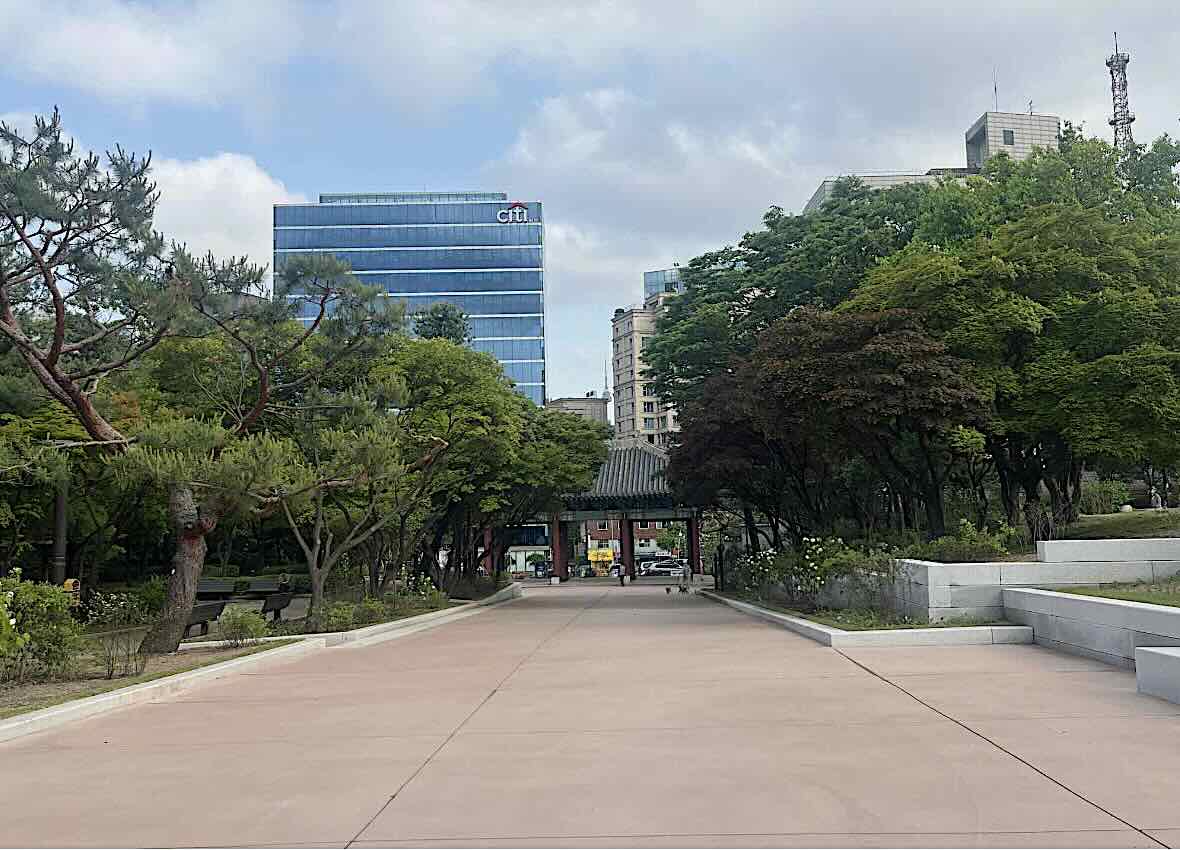

Seoul City has completed the first phase of its plan to transform the Gyeonghuigung Palace site in Jongno-gu into a traditional history and culture park, with upgrades focused on restoring the palace entrance and royal pathway (eodo) as a serene urban garden.
Built in 1616, Gyeonghuigung was once one of the five major palaces of the Joseon Dynasty, known as the “Western Palace” in later years.
Despite its historical significance and large open space in the heart of the city, the palace had seen diminished public use due to damage, limited restoration, and a lack of accessible entryways.
The city removed outdated concrete paving and boundary stones between Heunghwamun and Sungjeongmun, replacing them with traditional stone landscaping, native tree plantings, including apricot trees and peonies, and a new lawn garden.
A total of 1,200 trees and 4,800 perennials were planted, along with upgraded lighting, signage, and seating.
This restored area is intended not just as a resting space but as a site for reflection on Korea’s cultural heritage, blending traditional palace aesthetics with natural elements for public enjoyment.
Future plans include creating a climate-responsive “urban forest” around the site and integrating it with Seoul’s broader Garden Connector initiative, which links fragmented green spaces to enhance ecological continuity and public access.